 how-to
Bible Study for Women at Home: A Beginner's Guide
Last Updated: October 23, 2026
Quick Summary
Bible study for women at home requires only a Bible, notebook, and quiet space to begin. Start with a simple four-column worksheet method, observation, interpretation, theology, and application, using 6-12 verse passages you can finish in one sitting. Attach your study to a daily anchor like your morning coffee, choose a session length you can repeat (5-45 minutes depending on your season), and prioritize consistency over perfection.
- The four-column worksheet method removes the blank-page problem by guiding observation, interpretation, theology, and application in a repeatable structure.
- Choose a session length you can actually repeat, micro sessions of 5-10 minutes beat ambitious 45-minute sessions you abandon.
- Attach your study to an existing daily anchor like your first cup of coffee or after school drop-off instead of choosing a clock time.
- Start with one short passage of 6-12 verses in a Gospel like Mark, reading it three times with different purposes each time.
- Track consistency with a simple habit tracker showing days you showed up, not chapters completed, the pattern matters more than speed.
Table of Contents
- What You'll Need to Start Bible Study at Home
- A Bible Study Guide for Beginners: Step-by-Step Method
- Building a Daily Bible Study Routine That Fits Your Schedule
- Using Bible Study Questions for Women to Deepen Reflection
- Creating a Personalized Bible Study Plan for Women
- Staying Consistent: Common Mistakes to Avoid
- Frequently Asked Questions
What You'll Need to Start Bible Study at Home
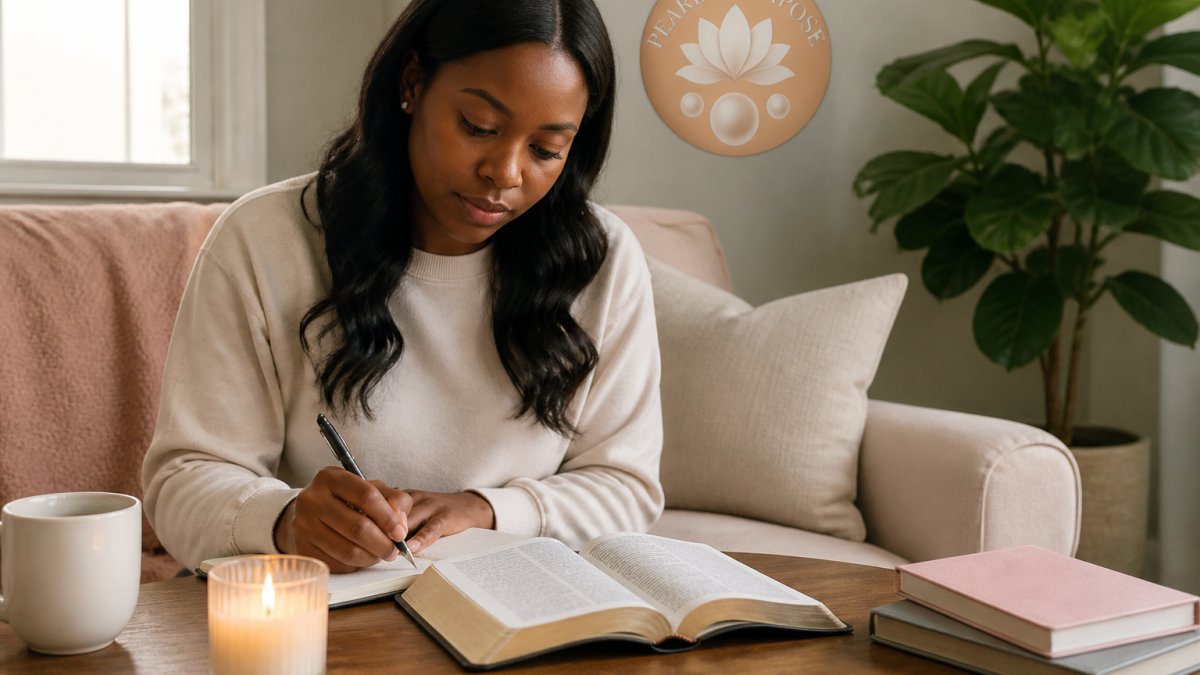
Starting a Bible study for women at home doesn't require much: a Bible, a notebook, and a quiet space.
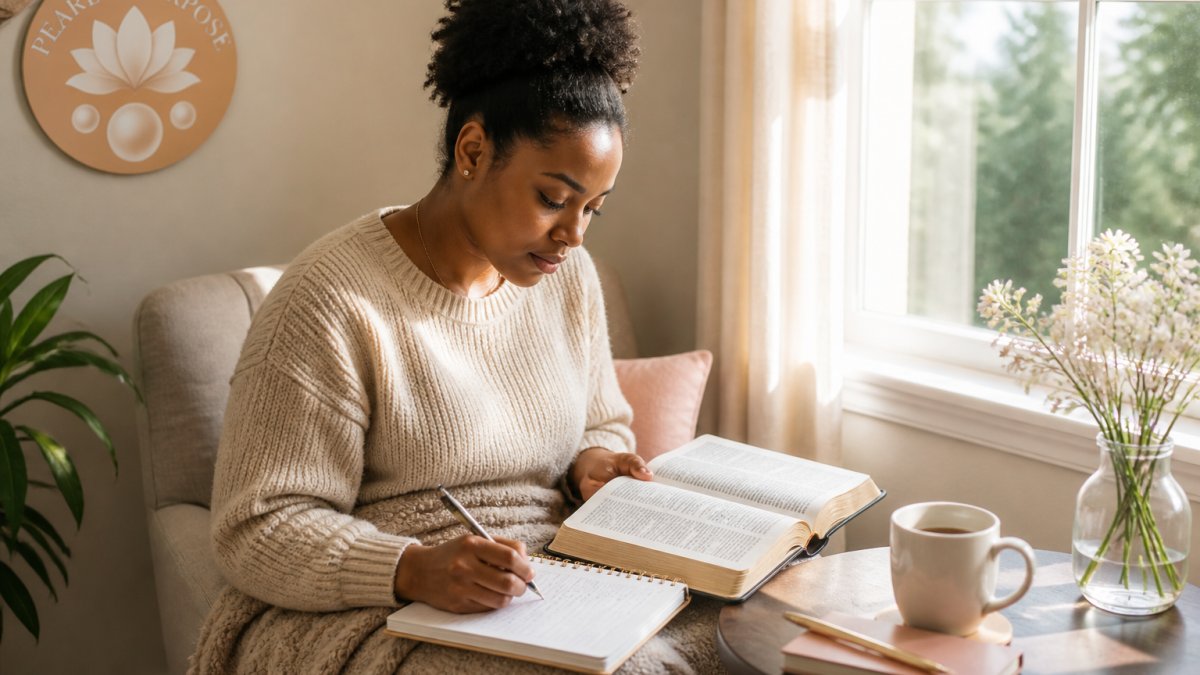
Here's what works best for most women:
- A Bible (any translation you prefer)
- A notebook or journal for notes and reflections
- A pen or pencil
- A quiet corner or space in your home
- Optional: a study guide or devotional resource
- Optional: a warm beverage or candle for atmosphere
The Women's Ministry Toolbox emphasizes that guided, self-paced Bible study resources are widely available for women studying at home.
Your space matters more than your supplies.
Many women find that investing in one quality study resource helps them stay focused.
Start simple. Add complexity later if you want it.
A Bible Study Guide for Beginners: Step-by-Step Method
Most beginner guides describe observe, interpret, apply without showing you how to do them on a real passage. The Bible Study Guide vs Devotional for Busy Women compares different approaches to help you choose the method that fits your needs.
The four-column worksheet
Before you read, draw four columns in your notebook:
- What it says (observation)
- What it means (interpretation)
- What it shows about God (theology)
- What I will do (application)
Step 1: Choose a passage you can finish in one sitting
Step 2: Read three times with a different job each time
- First read, get the flow. Read the whole passage without stopping. Do not take notes. Just follow what happens.
- Second read, mark what stands out. Underline repeated words, circle names, and put a star next to anything that surprises you or raises a question.
- Third read, look for structure. Notice words like "therefore," "but," "because," and "so that." These signal how the author is connecting ideas.
Step 3: Fill the observation column
Answer only what the text plainly says:
- Who is speaking, and to whom?
- What action happens?
- Where and when does it take place?
- What words repeat?
- What is the tone, comfort, warning, correction, praise?
Use short phrases, not full sentences. The goal is accuracy, not elegance.
Step 4: Fill the interpretation column
Now ask what the passage means in context:
- What comes immediately before and after?
- Why would the author include this detail for the original readers?
- How does it connect to the wider story of Scripture?
- Are there words to look up in a dictionary or study Bible note?
A study Bible with book introductions and cross-references is the single most useful tool here.
Step 5: Fill the theology column
Ask what the passage reveals about God's character, promises, and purposes.
Step 6: Fill the application column
Application should be measurable.
A worked example: Mark 4:35-41
- What it says: Jesus tells the disciples to cross the lake. A storm comes. The disciples wake Jesus, who calms the wind and waves. He asks why they are afraid. They are terrified and ask who he is.
- What it means: The passage contrasts the disciples' fear with Jesus' authority. The storm is real, but Jesus' command over creation reveals his identity. The question "Who then is this?" is the point of the story.
- What it shows about God: Jesus has authority over chaos and is present with his followers in the storm, not absent from it.
- What I will do: When a situation feels out of control this week, I will name the fear, read this passage, and write one sentence about what it shows me about Jesus.
Step 7: Close in prayer
Common beginner mistakes to avoid
- Skipping observation to get to application. You cannot apply what you have not understood.
- Using only one translation. Reading the same passage in a second translation (for example, a formal one and a plain-language one) surfaces meaning you would otherwise miss.
- Studying a passage in isolation. Always read the surrounding verses.
- Waiting for the perfect study Bible. A basic Bible and a notebook are enough to start; add tools as you go.
Building a Daily Bible Study Routine That Fits Your Schedule
"Pick a time and stick with it" fails because home schedules are unpredictable.
Decide the anchor, not the hour
Instead of choosing a clock time, attach your study to an anchor you already do every day without fail. Common anchors include:
- The first cup of coffee before anyone else is awake
- The ten minutes after school drop-off
- Right after you put the kids down for nap or bedtime
- The moment you sit down at your desk before opening email
- Immediately after dinner cleanup
An anchor is more reliable than a time because it travels with you.
Choose a session length you can repeat, not the length you aspire to
A repeatable 10-minute session beats an ambitious 45-minute session you do twice and abandon. Three lengths work:
- Micro (5-10 minutes): one short passage, one observation, one sentence of application. Ideal for weekdays with young children or early work starts.
- Standard (15-20 minutes): read the passage twice, answer two or three questions, write a short reflection. The workhorse length for most at-home study.
- Deep (30-45 minutes): one day a week when you have more margin.
A common pattern: micro sessions on weekdays, one deep session on the weekend.
Build a weekly rhythm instead of a daily grind
Daily study is ideal, but a weekly rhythm is more realistic for many women:
| Day | Focus | Time |
|---|---|---|
| Monday | Read the week's passage once | 10 minutes |
| Tuesday | Observation questions | 15 minutes |
| Wednesday | Interpretation questions | 15 minutes |
| Thursday | Cross-references and context | 15 minutes |
| Friday | Application and journaling | 15 minutes |
| Saturday | Deep session and review | 30-45 minutes |
| Sunday | Rest or light reading | Optional |
You don't have to hit every day.
Protect the session with three small rules
Join our Listener Circle for gentle encouragement →
- Phone in another room. Not face-down on the table, in another room. The physical distance removes the reflex to check it.
- One open resource at a time. Keep your Bible, your notebook, and one study guide on the table. Everything else stays on the shelf. Visual clutter becomes mental clutter.
- Set a visible end. A timer or a clock in view prevents the session from feeling open-ended and makes it easier to start.
Adapt for the season you are actually in
A routine that works in one season will break in another. Plan for the shift:
- New baby or toddler years: drop to micro sessions and one weekly deep session. Keep the anchor; shrink the length.
- Caregiving or heavy work seasons: audio Bible during commutes or chores, one journal sentence at night.
- Grief or burnout: one psalm a day with no questions. The goal is presence, not productivity.
- Empty nest or retirement: expand to a standard daily session plus a weekly deep study.
Track consistency, not completion
A simple habit tracker, a paper calendar with a dot for each day you showed up, motivates more than a chapter checklist.
Using Bible Study Questions for Women to Deepen Reflection
Questions transform passive reading into active engagement, revealing layers you'd otherwise miss.
Types of Questions That Work
Observation questions ask what the text says: Who is speaking? What happened?
Interpretation questions ask what it means: Why did the author include this detail?
Application questions ask how it applies: What does this teach me about God?
Start with observation, it's easier and builds confidence, then move to interpretation and application.
Create Your Own Questions
Write questions as you read, not after you finish, the ones that arise naturally are often the most powerful. The Bible Study Reflections offers journaling prompts and reflection tools to deepen this practice.
Use Questions to Slow Down
Bible study for women at home works best when you linger, and questions force you to.
Creating a Personalized Bible Study Plan for Women
Generic plans don't always fit your life. A personalized approach respects your schedule, interests, and spiritual needs.
Choose Your Study Focus
Textual studies work through a book chapter by chapter, building comprehensive understanding of how a writer develops ideas.
Character studies trace one biblical figure's story, struggles, and growth. This approach feels personal and relatable.
Set a Realistic Timeline
Don't commit to the entire Bible in a year, that's overwhelming.
Track Your Progress
Use a simple checklist, marking off each week or chapter.
Staying Consistent: Common Mistakes to Avoid
Mistake 1: Perfectionism
Mistake 2: Choosing the Wrong Study
Mistake 3: No Accountability
Studying alone is beautiful. It's also easy to abandon quietly.
The fix is simple accountability. Tell one friend what you're studying.
Mistake 4: Treating it Like a Checklist
Bible study for women at home isn't about completion. It's about transformation. Slow down.
Mistake 5: Ignoring Your Life
You study Scripture but don't connect it to your actual struggles.
At Pearls of Nourishment, we believe spiritual grounding happens in quiet moments.
The practices in this guide are simple enough to start today.
Frequently Asked Questions
How do I start a Bible study routine at home if I'm a complete beginner?
Begin with a single Bible passage and a simple Bible study guide for beginners. Choose a quiet time, even 15 minutes daily. Read the passage slowly, write down one observation, ask yourself what it means for your life today, and pray about it. Start with a topical study or the Gospel of John, which are accessible entry points. Consistency matters more than length, short daily studies build momentum better than occasional longer sessions.
What's the difference between a study Bible and a regular Bible for women's Bible study?
A study Bible includes notes, cross-references, maps, and commentary alongside Scripture text. A women's study Bible adds notes written specifically for women's spiritual concerns, life transitions, and faith questions. For beginners, a study Bible's built-in explanations reduce the need for external resources. A regular Bible works fine if you pair it with a Bible study guide or workbook that provides context and questions.
How long should a daily Bible study routine actually take?
Most busy women find 15-30 minutes sustainable for a daily Bible study routine. This allows time to read a passage, reflect on it, and write a brief note or prayer. Longer sessions (45-60 minutes) work for weekly in-depth study, but shorter daily rhythms build consistency. Quality of engagement matters more than duration, a focused 15 minutes beats a distracted hour.
How can I stay consistent with Bible study at home when life gets hectic?
Anchor your study to an existing habit: after morning coffee, during lunch, or before bed. Set a specific time and place, even if it changes seasonally. Use a Bible study plan for women that fits your schedule, some offer five-day studies with weekends off. Track progress with a simple checklist. When you miss days, restart without guilt; consistency is built through returning, not perfection.