 how-to
How Can Grounding Techniques Steady Your Emotions?
Last Updated: October 25, 2026
Quick Summary
Grounding techniques emotions are practical methods that anchor you to the present moment when anxiety, stress, or overwhelming emotions pull you away by engaging your five senses and body to interrupt distressing thoughts and restore emotional stability.
- The three main categories are sensory grounding, physical grounding, and mental grounding, each working differently for different people.
- The 5-4-3-2-1 technique takes 2-5 minutes and engages all five senses to pull attention into the present moment.
- The 3-3-3 rule takes about one minute and works for quick emotional regulation at work, school, or in public.
- Physical grounding through slow deep breathing activates your parasympathetic nervous system and can be done in 4-count cycles repeated 5-10 times.
- Quick techniques like the hand-on-heart method take 30 seconds and can interrupt a stress spiral before it escalates.
Table of Contents
- What Grounding Techniques Are and How They Work
- When to Use Grounding Techniques for Anxiety and Overwhelm
- The 5-4-3-2-1 Grounding Technique for Sensory Awareness
- Using the 3-3-3 Grounding Rule to Regain Control
- Breathing and Progressive Muscle Relaxation for Physical Grounding
- Bible Verses for Anxiety and Spiritual Grounding
- Quick Grounding Exercises for Stress at Work or Home
- Choosing Your Grounding Practice with Pearls of Nourishment
- Frequently Asked Questions
What Grounding Techniques Are and How They Work
Grounding techniques emotions are practical methods that anchor you to the present moment when anxiety, stress, or overwhelming emotions pull you away.
When you're anxious, your mind races to worst-case scenarios and your body tenses.
At Pearls of Nourishment, we know busy moms need tools that work fast and fit real life. Grounding isn't complicated, no special equipment or hours of practice.
The most effective grounding techniques fall into three categories:
- Sensory grounding uses your five senses to anchor attention to the present
- Physical grounding engages your body through breathing, muscle relaxation, or movement
- Mental grounding uses visualization and spiritual reflection to restore emotional clarity
Each approach works differently for different people. Some calm instantly by noticing five things they see; others need their feet on the ground or slow, deliberate breaths.
When to Use Grounding Techniques for Anxiety and Overwhelm
Use grounding techniques when you notice the early signs of anxiety, stress, or emotional upheaval. The sooner you intervene, the easier it is to regain control.
Common moments to use grounding include:
- When racing thoughts won't stop
- During a panic attack or moment of acute anxiety
- When you feel emotionally scattered or unsteady
- Before a stressful conversation or event
- When parenting stress peaks and you're about to lose patience
- At work or school when you need to stay calm and focused
- When grief, anger, or overwhelming emotion surfaces unexpectedly
Grounding works best as prevention, not just crisis management. Practice when you're calm so your nervous system recognizes the pattern and responds faster when stress hits.
The techniques in this guide are designed for Bible Verses for Anxiety and Spiritual Grounding and moments when you need to reconnect with God while steadying your emotions. You can also explore Bible Verses for Overwhelmed Moms: 12 Passages for Peace for additional spiritual support.
Watch out: Grounding techniques are helpful tools, but they're not a substitute for professional mental health support. If anxiety, panic, or overwhelming emotions persist or worsen, reach out to a therapist or counselor.
The 5-4-3-2-1 Grounding Technique for Sensory Awareness
The 5-4-3-2-1 technique is one of the most popular sensory grounding methods, engaging all five senses in sequence to pull your attention into the present moment.

Here's how to practice it:
-
Notice 5 things you see. Look around and name five specific things: the color of a pillow, light coming through a window, a picture on the wall, your child's toy, the pattern on a rug. Don't rush. Really look.
-
Notice 4 things you can touch. Feel the texture of your clothing, the chair beneath you, your hair, a blanket. Pay attention to temperature and texture.
-
Notice 3 things you can hear. Listen for sounds around you, a fan, traffic, birds, voices, the hum of appliances. Name them specifically.
-
Notice 2 things you can smell. If you can't smell anything obvious, move closer to something fragrant, coffee, lotion, a candle, fresh air from a window.
-
Notice 1 thing you can taste. Taste your mouth, eat a mint, drink water, or chew gum. The sensation brings you fully into your body.
This technique typically takes 2-5 minutes. Your brain can't fully focus on sensory awareness and anxiety at once, you're retraining your attention.
The 5-4-3-2-1 grounding technique is especially effective for:
- Panic attacks and acute anxiety
- Dissociation or feeling disconnected from your body
- Racing thoughts you can't control
- Moments when you need to ground yourself discreetly
Practice during calm moments so your body learns the rhythm and moves through it automatically when anxiety hits.
Using the 3-3-3 Grounding Rule to Regain Control
The 3-3-3 grounding rule is simpler and faster than 5-4-3-2-1, perfect for work, school, or staying composed without drawing attention.
The technique:
- Name 3 things you see
- Name 3 sounds you hear
- Move 3 parts of your body (wiggle your fingers, tap your foot, roll your shoulders)
That's it. This takes about one minute and works remarkably well for grounding yourself quickly.
The 3-3-3 grounding rule is best for:
- Moments at work or school when you feel overwhelmed
- Quick emotional regulation before a difficult conversation
- Situations where you can't leave or take much time
- Building a habit of grounding throughout your day
Many busy moms use the 3-3-3 rule multiple times daily, at their desk, in the car, in line. It becomes a natural pause that steadies emotions without disrupting the schedule.
Breathing and Progressive Muscle Relaxation for Physical Grounding
Physical grounding works through your body to calm your nervous system. Anxiety makes breathing shallow and muscles tense; intentional breathing and muscle relaxation reverse this pattern.
Slow, deep breathing is the foundation of physical grounding:
- Breathe in slowly through your nose for a count of 4
- Hold for a count of 4
- Exhale slowly through your mouth for a count of 4
- Pause for a count of 4
- Repeat 5-10 times
This pattern activates your parasympathetic nervous system, triggering the relaxation response: heart rate slows, muscles soften, anxiety decreases.
Join our Listener Circle for gentle encouragement →
Progressive muscle relaxation takes this further by systematically tensing and releasing muscle groups:
- Tense your feet for 5 seconds, then release
- Tense your calves for 5 seconds, then release
- Continue up through your legs, torso, arms, and face
- Notice the contrast between tension and relaxation
This takes 10-15 minutes and powerfully releases stored tension and regains body awareness.
Physical grounding techniques are especially helpful for:
- Panic attacks with physical symptoms
- Chronic stress that lives in your muscles
- Insomnia or racing thoughts at night
- Rebuilding connection to your body after trauma or dissociation
Practice these methods when you're calm so your body recognizes them during stress.
Bible Verses for Anxiety and Spiritual Grounding
Spiritual grounding anchors you to your faith when emotions feel overwhelming.
When anxious or scattered, pause and hold a verse. Let the words settle; speak them aloud if you can. This combines mental grounding with spiritual truth.
Verses about God's presence, peace, and protection ground the spirit. Reading Scripture slowly gives your nervous system time to calm while your spirit finds stability.
For specific Bible verses and deeper spiritual grounding practices, explore Bible Scripture for Anxiety: 7 Verses for Peace. These passages address anxiety directly and remind you of God's faithfulness during difficult moments.
Combining prayer with grounding creates a powerful practice. You might:
- Pray while using the 5-4-3-2-1 technique
- Speak a Bible verse during slow breathing
- Journal your thoughts after a grounding exercise
- Sit in silence with Scripture after using progressive muscle relaxation
This integration of faith and grounding techniques emotions helps you meet God mid-day while steadying your emotions.
Quick Grounding Exercises for Stress at Work or Home
Some moments don't allow for a 10-minute practice. You need grounding that works in 60 seconds or less, and to know how to adapt it if it feels wrong.
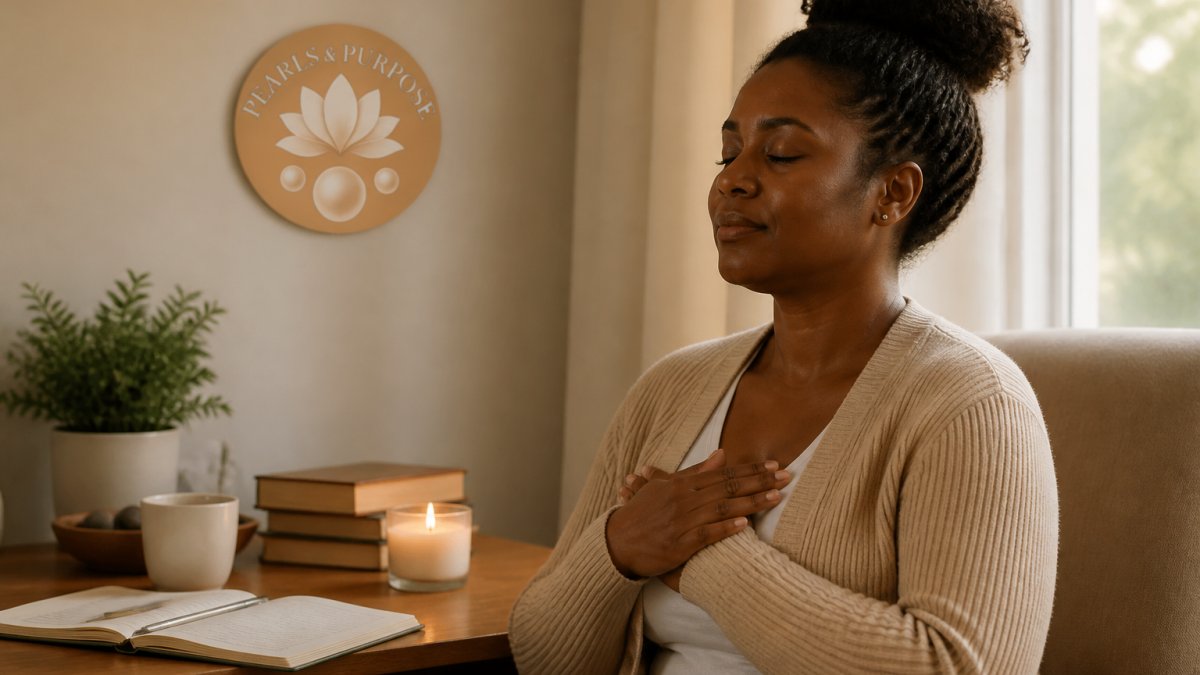
The hand-on-heart technique takes 30 seconds:
- Place your hand on your heart
- Feel your heartbeat
- Take 3 slow, deep breaths
- Notice the warmth and pressure of your hand
This simple act signals safety to your nervous system and can interrupt a stress spiral quickly.
The ice water method works in under a minute:
- Hold ice cubes in your hand or splash cold water on your face
- Feel the shock and intensity
- Focus on the physical sensation until it passes
The cold sensation grounds you powerfully in your body and present moment.
The grounding statement takes seconds:
- Say aloud or silently: "I am safe. I am here. This will pass."
- Notice your feet on the ground
- Feel the chair or surface supporting you
These quick techniques interrupt the anxiety cycle before it escalates. Use them at work, during parenting stress, or anytime you need fast relief.
Adaptations for trauma, panic, dissociation, or sensory sensitivities. Body-focused techniques are not right for everyone.
| Technique | Time | Best For | Where |
|---|---|---|---|
| Hand on heart | 30 seconds | Quick calm | Anywhere |
| Ice water | 1 minute | Intense grounding | Home, office |
| Grounding statement | 30 seconds | Mental reset | Anywhere |
| 3-3-3 rule | 1 minute | Discreet grounding | Work, school, public |
| 5-4-3-2-1 | 2-5 minutes | Deep sensory work | Home, quiet space |
Choosing Your Grounding Practice with Pearls of Nourishment
Different techniques work for different people.
Step 1: Check your setting. If you are in public, at work, or in a school pickup line, choose a discreet technique that no one will notice: the 3-3-3 rule, a grounding statement, or hand-on-heart under a sweater. If you are alone at home, you can use the full 5-4-3-2-1 sequence, progressive muscle relaxation, or cold water on your face.
Step 2: Check your time. Under one minute: grounding statement, hand-on-heart, or 3-3-3.
Step 3: Check your distress level. For mild scattered feelings, sensory techniques like 5-4-3-2-1 are usually enough.
Step 4: Check your sensory preference. Visually oriented? Lean on the '5 things you see' step.
Many busy moms rotate techniques across the day: 3-3-3 during work stress, 5-4-3-2-1 in the evening, hand-on-heart with prayer for spiritual grounding. Variety keeps your practice fresh and addresses different types of stress.
The goal isn't perfection, it's tools that work for your nervous system and schedule.
Pearls of Nourishment offers Bible Study Reflections and devotional content designed to complement your grounding practice.
Frequently Asked Questions
What is the 3-3-3 grounding rule and how do I use it?
The 3-3-3 grounding rule helps you regain emotional stability by engaging three senses. Name three things you see, three things you hear, and three things you can touch. This simple technique redirects your mind from distressing thoughts to present-moment awareness. It takes less than two minutes and works well during moments of panic or overwhelming anxiety.
Can Bible verses for anxiety actually help ground my emotions?
Yes. Scripture anchors your mind in truth and spiritual perspective during distress. Verses about God's presence, peace, and strength (like Philippians 4:6-7 or Psalm 23) calm your nervous system while deepening your faith. Pairing Bible verses with breathing or sensory grounding creates a powerful spiritual and emotional reset that addresses both your immediate anxiety and your spiritual foundation.
Which grounding technique works best for busy moms?
The 5-4-3-2-1 technique and the 3-3-3 rule are fastest for moms with limited time. Both take under three minutes and require no special setup. Hand-on-heart breathing is equally quick. Choose based on your preference: sensory techniques work well for scattered emotions, while breathing grounds you when stress builds physically. Pairing any technique with a brief prayer or Scripture verse adds spiritual depth without adding time.
How do I know if a grounding technique is actually helping me?
Notice whether your breathing slows, your shoulders relax, or your racing thoughts quiet within the first minute or two. You should feel more present and less caught in anxious thoughts. If a technique doesn't shift your emotional state after a few tries, try a different one, what works depends on whether you respond better to sensory input, movement, breathing, or spiritual connection.
Grounding techniques are gifts you give yourself. They work best when you practice them regularly, not just during crisis. Start small. Pick one technique. Use it daily. As you build the habit, you'll notice stress affects you differently. You'll respond faster. You'll stay calmer. Your emotional stability will grow. Join our Listener Circle for gentle encouragement as you develop your grounding practice and deepen your spiritual foundation.